2026-06-13 · sleep apnea, OSA, obstructive sleep apnea, CPAP, weight loss, tirzepatide, GLP-1, sleep, metabolic health
Updated 2026-07-13
Written by WeightFAQ Staff
Evidence-informed guidance from the WeightFAQ editorial team.
17 min read
Last editorial review Jul 13, 2026
Sleep Apnea (OSA) and Weight Loss: Why It Matters and How Much to Lose
Quick stats
- Prevalence (overweight/obese adults): ~25%
- Weight-loss target for clinically meaningful improvement: 7–10%
- AHI reduction at 10% weight loss: ~26% on average (Foster 2009)
- FDA-approved drug class for moderate-severe OSA in obesity: tirzepatide (Zepbound, Dec 2024)
- Time to measurable change: 3–6 months
What sleep apnea actually is (and the 3 numbers your doctor uses)
Obstructive sleep apnea (OSA) is what happens when the soft tissues around the upper airway collapse repeatedly during sleep, briefly cutting off airflow despite ongoing effort to breathe. Each event ends with a partial awakening — usually too brief to remember — that fragments sleep, drops blood oxygen, and forces the cardiovascular system to spike adrenaline dozens or hundreds of times a night. It is the most common form of sleep-disordered breathing and the one most tightly tied to body weight.
Three numbers describe how bad it is:
- AHI — apnea-hypopnea index. The average number of full breathing pauses (apneas) plus partial obstructions (hypopneas) per hour of sleep. The standard thresholds are 5–14 = mild, 15–29 = moderate, and ≥30 = severe OSA.
- ODI — oxygen desaturation index. The number of times per hour your blood oxygen drops by at least 3–4% from baseline. Often tracks AHI but captures the cardiovascular strain more directly.
- Oxygen nadir. The lowest single oxygen reading during the night. A nadir below 88% — and especially below 80% — flags higher cardiovascular risk and usually argues for prompt treatment.
OSA is distinct from central sleep apnea, in which the brain briefly stops sending the signal to breathe. Central apnea is less common, often linked to heart failure, opioid use, or high altitude, and weight loss is much less helpful for it. (Untreated OSA is itself one of the strongest reversible drivers of HFpEF — see heart failure and weight loss for the OSA → right-heart strain cascade. It is also one of the most common reasons obese-asthma stays poorly controlled despite a textbook inhaler regimen — see asthma and weight loss for the obese-asthma protocol. OSA-COPD overlap syndrome is a separate, high-mortality combination where weight loss plus CPAP is additive — see COPD and weight loss for the overlap-syndrome framework.) The rest of this article is about OSA — the obstructive kind — which is the form weight loss reliably moves.
How weight and OSA reinforce each other
The relationship between weight and OSA is bidirectional, and that is the single most important thing to understand about it.
The mechanical side. Fat accumulates not only around the abdomen but also in the soft tissues of the neck and around the tongue base. Pharyngeal fat narrows the airway and makes it more collapsible when the muscles relax during sleep. Neck circumference greater than ~17 inches in men or ~16 inches in women is one of the cleaner anatomical predictors of OSA in any BMI category.
The hormonal side. Fragmented sleep — even at adequate duration — shifts the hormones that govern appetite and metabolism. Spiegel and colleagues’ 2004 sleep-restriction work, and the larger literature that followed, shows the pattern reliably:
- Ghrelin (the hunger hormone) rises.
- Leptin (the satiety hormone) falls.
- Insulin resistance worsens, raising fasting glucose and pushing more circulating energy into fat storage.
- Next-day appetite rises — disproportionately for high-carb, high-calorie foods.
The clinical consequence is a vicious circle: weight gain narrows the airway, the narrowed airway fragments sleep, the fragmented sleep raises appetite and worsens insulin sensitivity, and the resulting weight gain narrows the airway further. This is the loop weight loss has to break — and the reason untreated OSA is one of the most common hidden reasons people feel stuck despite “doing everything right.” The broader appetite-and-recovery picture sits in our overview of sleep, stress, and weight management, which covers the behavioral side; this article is the clinical-condition deep dive.
How OSA gets diagnosed in 2026 — what to ask for
You do not need to push for an in-lab study right away. Most people move through a tiered path, with the right test depending on symptoms and risk.
| Test | What it tells you | When it is the right test | When you need the next step |
|---|---|---|---|
| STOP-BANG questionnaire | Pre-test probability of OSA based on 8 yes/no questions | First screen — free, takes 1 minute, scored in clinic | Score ≥3 → request an objective test (HSAT or PSG) |
| Home sleep apnea test (HSAT) | AHI, ODI, oxygen levels over 1–3 nights at home; chest band + finger oximeter + airflow sensor | Uncomplicated suspected OSA in an otherwise healthy adult | Negative test with persistent symptoms, significant cardiopulmonary disease, or suspected central apnea → in-lab study |
| In-lab polysomnography (PSG) | Full sleep-stage data plus AHI, ODI, EEG, EMG, EKG | Significant heart or lung disease, suspected central apnea, treatment-emergent central apnea on CPAP, or equivocal HSAT | Used to titrate complex therapy or confirm diagnosis when HSAT is insufficient |
| Wearable rings/watches | Estimated AHI proxy via heart rate variability, oxygen, motion | Pattern-spotting and screening interest — not diagnostic | Any positive flag should be followed by a real HSAT or PSG before any treatment decisions |
A home test is fine for most adults with a high pre-test probability — habitual loud snoring, witnessed apneas, daytime sleepiness, hypertension — and no significant heart or lung disease. An in-lab study is the right choice if you have heart failure, chronic lung disease, suspected central apnea, neuromuscular disease, or a strongly suggestive history with a negative HSAT. Wearables are useful for prompting the conversation but should not anchor any treatment plan on their own.
How much weight loss actually improves OSA — the evidence
The dose-response between weight loss and AHI reduction is one of the cleanest findings in sleep medicine. The defining trial is the Sleep AHEAD study (Foster 2009, Archives of Internal Medicine), which randomized adults with obesity, type 2 diabetes, and OSA to either an intensive lifestyle intervention or diabetes-support education. At one year, the intensive-lifestyle arm lost about 10.8 kg on average versus 0.6 kg on control, and:
- Average AHI dropped by about 5.4 events/hour in the intensive group vs a small increase on control.
- Each 1 kg of weight loss was associated with roughly a 0.4–0.5 event/hour AHI drop.
- A 10% weight loss reduced AHI by about 26% on average.
- About 38% of intensive-lifestyle participants achieved OSA remission (AHI <5) at one year.
The Tuomilehto 2009 trial (American Journal of Respiratory and Critical Care Medicine) tested a structured very-low-calorie diet in adults with mild OSA. With sustained weight loss, mild-OSA remission exceeded 60% at five years — the longest durable-remission data we have for any non-surgical OSA intervention.
Worked example. A 220 lb adult with moderate OSA (AHI 28):
- A 7% loss (~15 lb) → expected AHI ~21–23 — usually still moderate but closer to the mild line and often enough to meaningfully improve symptoms.
- A 10% loss (~22 lb) → expected AHI ~20 — typically the low-moderate range, with a real chance of dropping into mild on repeat testing.
- A 15% loss (~33 lb) → often pushes into the mild range or remission, particularly if combined with side sleeping and alcohol moderation.
The losses do not have to be fast. Both trials used 12-month and multi-year protocols. Moderate, sustained weekly deficits — combined with consistent activity, a quality eating pattern, and treatment of the OSA in the meantime — is what produces durable AHI reduction.
SURMOUNT-OSA — what the tirzepatide trial actually showed
The biggest 2024 development in this space was SURMOUNT-OSA (Malhotra 2024, NEJM). The two-arm trial enrolled adults with obesity and moderate-to-severe OSA and randomized them to either tirzepatide (titrated to 10 or 15 mg weekly) or placebo for 52 weeks. The headline results:
- AHI dropped by about 25–29 events/hour in the tirzepatide arms vs about 5 on placebo.
- Roughly 40–50% of treated participants achieved either OSA resolution or improvement to mild OSA.
- Improvements were similar whether participants were using CPAP at baseline or not.
- Average weight loss in the tirzepatide arms was about 18–20%, in line with SURMOUNT-1.
On the strength of this trial, the FDA approved Zepbound for moderate-to-severe OSA in adults with obesity in December 2024 — the first medication ever approved specifically for OSA in an obesity context.
The honest framing matters. Tirzepatide is not an airway drug. It works on OSA because of the weight loss it produces — the relationship between kg lost and AHI dropped in SURMOUNT-OSA looks very similar to the relationship in Foster 2009 with diet and lifestyle. The reason it is clinically important is that it makes a 15–20% weight loss reliably achievable for many people who could not get there with lifestyle alone. Semaglutide and other GLP-1 medications have observational support for OSA improvement but lack the same level of dedicated trial evidence.
6-step OSA + weight-loss protocol
This is the simplest plan that fits the published evidence and the way sleep clinicians actually practice.
Step 1: Get the diagnosis
Start with a STOP-BANG screen if you have not already. Score 3 or higher, or any concerning combination (loud snoring, witnessed apneas, daytime sleepiness, hypertension), warrants an objective test. For most adults, that means a home sleep apnea test. Do not skip this step — symptoms alone are not specific enough to rule OSA in or out.
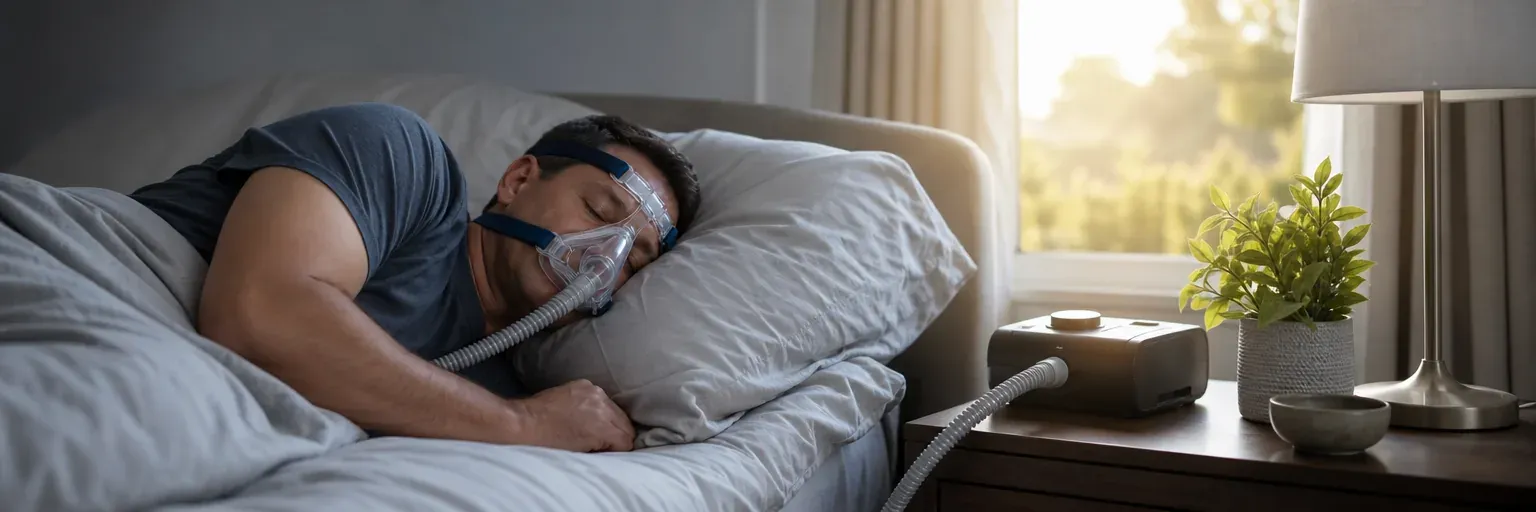
Step 2: Start CPAP or oral appliance now — don’t wait for weight loss
If your AHI confirms moderate or severe OSA, start therapy now. Untreated OSA continues to drive cardiovascular risk, daytime sleepiness, and metabolic damage even while you are working on weight loss, and the appetite-hormone effects of fragmented sleep actively work against your weight-loss efforts. CPAP is the first-line therapy; mandibular advancement devices (oral appliances) are reasonable for mild-to-moderate cases or for people who cannot tolerate CPAP. The rhythm side of this matters in particular: OSA is present in roughly half of obese AFib patients, and adherent CPAP cuts post-ablation recurrence by about 40% — see atrial fibrillation and weight loss for the full AFib protocol.
Step 3: Target 7–10% body-weight loss over 6–12 months
This is the dose-response threshold. The pace is intentionally moderate — about 0.5 to 1 percent of body weight per week — because the studies that produced the cleanest AHI improvements used long, steady protocols. A modest, maintainable deficit beats a sprint that gets undone.
Step 4: Side-sleep and elevate the head of the bed
Positional therapy is one of the few free interventions with real evidence. Sleeping on your side instead of your back reduces AHI in roughly half of patients with positional OSA, and elevating the head of the bed 30 degrees produces a smaller but consistent additional drop. Tennis-ball-in-a-T-shirt tricks work; so do dedicated positional devices. This will not replace CPAP for moderate-to-severe OSA, but it is a useful add-on.
Step 5: Cut evening alcohol and sedatives
Alcohol and benzodiazepine-class sedatives relax the airway muscles, worsen AHI, and blunt the arousal response that ends apneic events. Even moderate evening drinking can shift a borderline case into the diagnostic range. Capping alcohol — and ideally pushing it earlier in the day or eliminating it — is one of the highest-leverage same-night changes. The broader weight-loss case for cutting back sits in our alcohol and weight loss guide.
Step 6: Re-test AHI after 6–12 months of weight loss
Once you have held a 7–10% loss for 6–12 months, ask your sleep clinician about a repeat sleep study. If AHI has dropped substantially, therapy can sometimes be down-titrated (CPAP pressure reduced) or stopped. That decision should be guided by repeat objective data — not by how rested you feel — because subjective sleep quality is an imperfect proxy for AHI, and untreated residual OSA still carries cardiovascular risk.
CPAP, oral appliances, and surgery — quick-reference table
The treatment landscape is wider than most people realize. Each option has a clear best-fit patient and a clear evidence base.
| Treatment | What it does | Ideal candidate | Evidence summary |
|---|---|---|---|
| CPAP | Pneumatic splint — pressurized air keeps the airway open during sleep | First-line for all severity levels; especially moderate-to-severe OSA | Largest evidence base; reliably normalizes AHI when used ≥4 hours/night; long-term adherence ~50–70% |
| Mandibular advancement device | Custom dental appliance that holds the jaw slightly forward, opening the airway | Mild-to-moderate OSA, CPAP intolerance, position-dependent OSA | Reduces AHI ~40–50% on average; less effective than CPAP for severe disease but better adherence |
| Positional therapy | Devices or shirts that prevent supine sleep | Documented positional OSA (AHI ≥2× worse on back) | Reduces AHI ~50% in true positional cases; useful adjunct |
| Hypoglossal nerve stimulation (Inspire) | Implanted device that stimulates the tongue muscles during sleep | Moderate-to-severe OSA, BMI typically <35, CPAP-intolerant | STAR trial showed 68% AHI reduction at 12 months; durable at 5 years; requires surgical implant |
| Weight-loss / bariatric surgery | Sustained large weight loss reduces pharyngeal fat | BMI ≥35 with significant comorbidity, or BMI ≥40 | ~75–85% OSA improvement after surgery; full remission in ~40% (Greenburg 2009 meta-analysis) |
Bariatric surgery and OSA
When OSA and severe obesity coexist and lifestyle plus medications are not enough, bariatric surgery produces some of the largest OSA improvement numbers in the literature. The Greenburg 2009 meta-analysis (American Journal of Medicine) pooled 12 studies: average AHI dropped from ~55 to ~16 events/hour, about 75–85% of patients had clinically meaningful improvement, and about 40% achieved full remission. Surgery is the right tool for the right patient — typically BMI ≥40, or BMI ≥35 with significant comorbidity. See our bariatric surgery overview for the decision framework.
Special situations
OSA in women
OSA is meaningfully under-diagnosed in women. Women more often present with fatigue, insomnia, morning headaches and migraine, and mood symptoms than with loud snoring, and they are more likely to have non-snoring OSA. Menopause raises risk through weight redistribution and loss of progesterone’s upper-airway tone. Nocturia (waking more than twice per night to urinate) is also a frequently overlooked OSA signal in women — untreated OSA raises nighttime urine production via nocturnal natriuresis, and CPAP plus modest weight loss cuts both nocturia and stress urinary leaks; see urinary incontinence and weight loss. Untreated OSA also amplifies widespread chronic pain — it is one of the most common hidden drivers of poorly-controlled fibromyalgia in women. If you are a woman with treatment-resistant fatigue or stalled weight loss, ask specifically about OSA — even if you do not snore.
OSA in lean adults
About 10–20% of OSA occurs at BMI under 25. Anatomical factors — narrow maxilla, large tonsils, low hyoid bone, retrognathia — matter more than weight here. Weight loss still helps but with smaller proportional impact. Lean adults often do well with mandibular advancement devices, positional therapy, or hypoglossal nerve stimulation.
OSA and erectile dysfunction in men
OSA roughly doubles the risk of erectile dysfunction (Budweiser 2009), and CPAP plus weight loss outperforms either alone for men with both conditions. The full dose-response and protocol sits in erectile dysfunction and weight loss. OSA is also one of the most under-recognized causes of low testosterone in men with obesity — REM sleep fragmentation blunts the morning T surge (Luboshitzky 2002), and CPAP partially restores it (Hoyos 2012). See low testosterone and weight loss before considering TRT for “stubborn” low T.
OSA on GLP-1s
The SURMOUNT-OSA data applies most clearly to tirzepatide. Semaglutide has observational and physiology-based evidence — driven by the same weight-loss mechanism — but lacks a dedicated phase-3 OSA trial. If OSA is a primary target, tirzepatide is the better-supported choice today; semaglutide is reasonable when cost, coverage, or prior tolerance make it the more practical option.
When to call your doctor
Same-week, not routine:
- Daytime sleepiness severe enough to risk drowsy driving, or nodding off mid-conversation.
- Witnessed apneas reported by a bed partner.
- Unrefreshing 8-hour sleep with morning headaches — and if you are a young woman with recent weight gain, transient visual blackouts, or pulsatile tinnitus alongside the morning headache, screen for idiopathic intracranial hypertension (IIH), which clusters tightly with OSA.
- New or worsening high blood pressure that is hard to control on standard regimens — OSA is a leading cause of resistant hypertension.
- Worsening daytime sleepiness despite consistent CPAP use (possible mask leak, pressure problem, or treatment-emergent central apnea).
The deeper hormonal picture — how elevated cortisol and weight gain amplifies this loop, and how OSA and insulin resistance feed each other — sits in two companion guides.
Sleep Apnea and Weight Loss FAQ
How much weight do I need to lose to improve sleep apnea? About 7 to 10% of body weight is the threshold for clinically meaningful improvement. A 10% loss reduces AHI by about 26% on average (Foster 2009), and 38% of intensive-lifestyle patients reached remission at one year.
Can weight loss cure sleep apnea? Sometimes. Remission rates of 38% at one year (Foster 2009) and >60% at five years in mild OSA (Tuomilehto 2009) are achievable. Severe OSA, anatomical risk factors, and higher starting BMI make full cure less likely — but substantial improvement still applies.
Does tirzepatide (Zepbound) actually treat sleep apnea? Yes. SURMOUNT-OSA showed AHI drops of 25–29 events/hour at 52 weeks, and the FDA approved Zepbound for moderate-to-severe OSA in adults with obesity in December 2024. The effect runs through weight loss — not a separate airway mechanism.
Do I still need a CPAP if I lose weight? Usually yes, at least at first. Start therapy at diagnosis and re-test after 6–12 months of sustained 7–10% weight loss. Down-titration or stopping should be guided by repeat objective measurement, not how you feel.
How is sleep apnea diagnosed — do I need a sleep study? Yes, but most people start with STOP-BANG plus a home sleep apnea test. In-lab polysomnography is reserved for significant cardiopulmonary disease, suspected central apnea, or equivocal home-test results.
Why does sleep apnea make weight loss harder? Fragmented sleep raises ghrelin, lowers leptin, raises next-day appetite, and worsens insulin resistance (Spiegel 2004). Untreated OSA creates a vicious circle: weight gain narrows the airway, fragmented sleep raises appetite, more weight gain follows.
Sources
- Malhotra A, Grunstein RR, Fietze I, Weaver TE, Redline S, Azarbarzin A, et al. Tirzepatide for the treatment of obstructive sleep apnea and obesity (SURMOUNT-OSA). New England Journal of Medicine (2024).
- Foster GD, Borradaile KE, Sanders MH, Millman R, Zammit G, Newman AB, et al. A randomized study on the effect of weight loss on obstructive sleep apnea among obese patients with type 2 diabetes: the Sleep AHEAD study. Archives of Internal Medicine (2009).
- Kuna ST, Reboussin DM, Borradaile KE, Sanders MH, Millman RP, Zammit G, et al. Long-term effect of weight loss on obstructive sleep apnea severity in obese patients with type 2 diabetes. Sleep (2013).
- Peppard PE, Young T, Palta M, Skatrud J. Prospective study of the association between sleep-disordered breathing and hypertension. New England Journal of Medicine (2000).
- Peppard PE, Young T, Barnet JH, Palta M, Hagen EW, Hla KM. Increased prevalence of sleep-disordered breathing in adults. American Journal of Epidemiology (2013).
- Newman AB, Foster G, Givelber R, Nieto FJ, Redline S, Young T. Progression and regression of sleep-disordered breathing with changes in weight: the Sleep Heart Health Study. Archives of Internal Medicine (2005).
- Chirinos JA, Gurubhagavatula I, Teff K, Rader DJ, Wadden TA, Townsend R, et al. CPAP, weight loss, or both for obstructive sleep apnea. New England Journal of Medicine (2014).
- Tuomilehto HPI, Seppä JM, Partinen MM, Peltonen M, Gylling H, Tuomilehto JOI, et al. Lifestyle intervention with weight reduction: first-line treatment in mild obstructive sleep apnea. American Journal of Respiratory and Critical Care Medicine (2009).
- Johansson K, Neovius M, Lagerros YT, Harlid R, Rössner S, Granath F, Hemmingsson E. Effect of a very low energy diet on moderate and severe obstructive sleep apnoea in obese men: a randomised controlled trial. BMJ (2009).
- Hudgel DW, Patel SR, Ahasic AM, Bartlett SJ, Bessesen DH, Coaker MA, et al. The role of weight management in the treatment of adult obstructive sleep apnea: an official American Thoracic Society clinical practice guideline. American Journal of Respiratory and Critical Care Medicine (2018).
- Ashrafian H, Toma T, Rowland SP, Harling L, Tan A, Efthimiou E, et al. Bariatric surgery or non-surgical weight loss for obstructive sleep apnoea? A systematic review and comparison of meta-analyses. Obesity Surgery (2015).
- Sjöström L, Peltonen M, Jacobson P, Ahlin S, Andersson-Assarsson J, Anveden Å, et al. Association of bariatric surgery with long-term remission of type 2 diabetes and with microvascular and macrovascular complications (SOS 15-year follow-up). JAMA (2014).
- Greenburg DL, Lettieri CJ, Eliasson AH. Effects of surgical weight loss on measures of obstructive sleep apnea: a meta-analysis. American Journal of Medicine (2009).
- Wilding JPH, Batterham RL, Calanna S, Davies M, Van Gaal LF, Lingvay I, et al. Once-weekly semaglutide in adults with overweight or obesity (STEP-1). New England Journal of Medicine (2021).
- Bixler EO, Vgontzas AN, Lin HM, Ten Have T, Rein J, Vela-Bueno A, Kales A. Prevalence of sleep-disordered breathing in women: effects of gender. American Journal of Respiratory and Critical Care Medicine (2001).
- Drager LF, Brunoni AR, Jenner R, Lorenzi-Filho G, Benseñor IM, Lotufo PA. Effects of CPAP on body weight in patients with obstructive sleep apnoea: a meta-analysis of randomised trials. Sleep Medicine Reviews (2019).
- Marin JM, Carrizo SJ, Vicente E, Agusti AG. Long-term cardiovascular outcomes in men with obstructive sleep apnoea-hypopnoea with or without treatment with continuous positive airway pressure: an observational study. Lancet (2005).
- Spiegel K, Tasali E, Penev P, Van Cauter E. Sleep curtailment in healthy young men is associated with decreased leptin levels, elevated ghrelin levels, and increased hunger and appetite. Annals of Internal Medicine (2004).