
2026-06-08 · DASH diet, diet comparison, blood pressure, weight loss, nutrition, Mediterranean
Updated 2026-07-31
Written by Maya Patel
Maya Patel is a WeightFAQ staff writer covering sustainable weight loss through mindful eating, flexible routines, and evidence-based nutrition. She translates research on protein, fiber, portion control, and calorie awareness into practical meal-planning guidance readers can actually follow at home. Her articles favor honest expectations over fad promises — small changes that compound, calorie bands scaled to real households, and grocery lists built around whole foods with room for real life. Maya writes for people juggling family meals, busy weeks, and long-term goals, not gym-optimized single adults with unlimited prep time.
14 min read
Medically reviewed on Jul 31, 2026
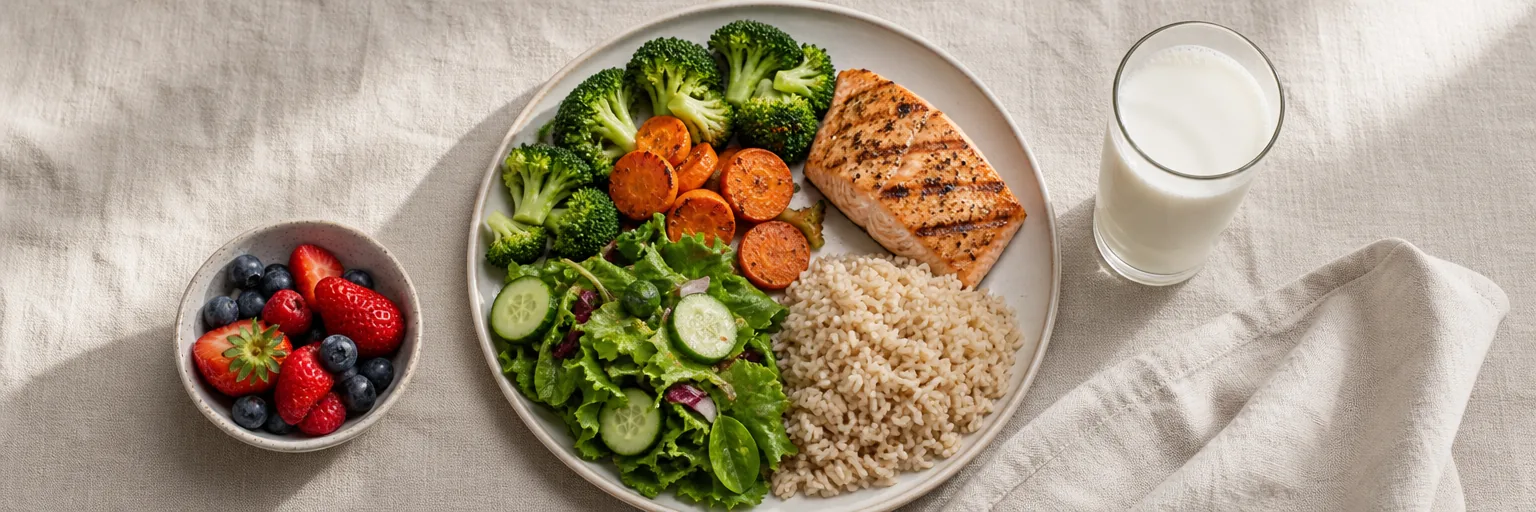
DASH Diet for Weight Loss: A Plain-English Guide to How It Works
Quick answer
DASH stands for Dietary Approaches to Stop Hypertension. The NHLBI built it in the mid-1990s to lower blood pressure, and it does — by 8 to 14 mmHg systolic in hypertensive adults at 8 weeks. Weight loss is a side effect: roughly 4 to 10 pounds at 6 months in calorie-controlled trials. The pattern is high in vegetables, fruit, whole grains, low-fat dairy, lean protein, beans, and nuts, and low in red meat, added sugar, and sodium (2,300 mg or 1,500 mg per day). It is a fair default if hypertension, prediabetes, or cardiovascular risk sits alongside your weight goal.
Who this is for / not for
Good fit if you:
- Have high blood pressure, prehypertension, or a family history of cardiovascular disease
- Want a flexible food-based pattern that doesn’t ban food groups
- Are open to building meals around vegetables, fruit, beans, whole grains, and lean protein
- Want gradual, sustainable weight loss alongside other cardiometabolic improvements
Not a fit if you:
- Need very rapid short-term weight loss
- Have stage 3b or higher chronic kidney disease (potassium and phosphorus loads are too high without modification)
- Are lactose intolerant or vegan and unwilling to substitute fortified soy or pea milk for the 2 to 3 daily dairy servings
- Prefer a low-carb or ketogenic structure (DASH is moderate-carb, around 55 percent of calories from carbohydrate)
What DASH actually is
DASH is a food pattern, not a brand or a points system. It was developed in the early 1990s by NHLBI-funded researchers asking a simple question: can changing food alone lower blood pressure as much as medication? The 1997 New England Journal of Medicine publication of the original DASH trial answered yes. The 2001 DASH-Sodium follow-up showed that layering a sodium reduction on top produced even larger drops.
The pattern itself is straightforward. It emphasizes:
- Vegetables (4 to 5 servings per day)
- Fruit (4 to 5 servings per day)
- Whole grains (6 to 8 servings per day at the 2,000 kcal level)
- Low-fat or fat-free dairy (2 to 3 servings per day)
- Lean meat, poultry, and fish (6 oz or less per day)
- Nuts, seeds, and legumes (4 to 5 servings per week)
- Healthy fats and oils (2 to 3 servings per day)
- Sweets and added sugar (5 or fewer servings per week)
There is no app, no required brand, and no proprietary food. The closest thing to a rulebook is the NHLBI’s free DASH Eating Plan PDF, which spells out the daily servings by calorie level. DASH overlaps significantly with the Mediterranean diet, and both compete for the top spot in the annual US News & World Report diet rankings.
The DASH plate at 1,500 / 1,800 / 2,000 calories
The NHLBI publishes serving targets by calorie level. These are the workhorses of the plan — get them roughly right and the calorie math takes care of itself.
| Food group | 1,500 kcal | 1,800 kcal | 2,000 kcal |
|---|---|---|---|
| Whole grains (servings/day) | 6 | 6 | 6–8 |
| Vegetables (servings/day) | 3–4 | 4–5 | 4–5 |
| Fruit (servings/day) | 4 | 4–5 | 4–5 |
| Low-fat dairy (servings/day) | 2–3 | 2–3 | 2–3 |
| Lean meat / poultry / fish (oz/day) | 3–4 | 6 | ≤6 |
| Nuts, seeds, legumes (servings/week) | 3 | 4 | 4–5 |
| Fats and oils (servings/day) | 1 | 2–3 | 2–3 |
| Sweets / added sugar (servings/week) | ≤3 | ≤5 | ≤5 |
A “serving” is intentionally modest: 1 slice whole-grain bread, 1/2 cup cooked grain, 1 cup raw leafy veg or 1/2 cup cooked, 1 medium fruit, 1 cup low-fat milk or 1.5 oz cheese, 1/3 cup nuts or 1/2 cup cooked beans, 1 tsp oil. If portion creep is a weakness, work through our portion control guide for the first 2 weeks.
DASH vs Mediterranean vs MIND: a head-to-head
These three patterns sit in the same neighborhood. They differ on a few specifics.
| Feature | DASH | Mediterranean | MIND |
|---|---|---|---|
| Sodium target | 2,300 mg (standard) or 1,500 mg (lower) | Not specified | Not specified |
| Dairy | 2–3 servings/day, low-fat | Modest, mostly yogurt and cheese | Limited cheese |
| Olive oil emphasis | Moderate | Central — primary fat | Primary fat |
| Fish target | Encouraged, no specific count | ≥2 servings/week | ≥1 serving/week |
| Berries emphasized | Yes (within fruit servings) | Within fruit servings | Yes — 2+ servings/week called out |
| Leafy greens emphasized | Yes (within vegetables) | Yes | Yes — 6+ servings/week called out |
| Wine | Discouraged | Optional (1 glass/day max) | Optional (1 glass/day max) |
| Weight-loss evidence | Moderate (modest loss when calorie-controlled) | Moderate to strong | Limited (designed for cognition) |
| Blood pressure evidence | Strongest of the three | Strong | Moderate |
| Sustainability | Good | Excellent | Good |
If hypertension is the main concern, pick DASH. For broad cardiometabolic health, Mediterranean is a defensible default. MIND targets cognitive decline and is best as an add-on, not a stand-alone weight plan. If the framing is inflammation — chronic joint pain, PCOS, post-menopause, or elevated CRP — the anti-inflammatory diet for weight loss overlaps DASH heavily but leans harder on berries, leafy greens, spices, and on cutting added sugar and alcohol. See our best diet for weight loss hub for a wider comparison.
The 5 daily DASH habits that drive weight loss
The pattern reduces to five repeatable habits in practice.
1. Low-sodium swaps at the grocery store. Most US sodium comes from packaged foods and restaurants, not the salt shaker. Choosing the lowest-sodium version of bread, soup, deli meat, cheese, sauces, and frozen meals cuts intake 30 to 50 percent. See how to read nutrition labels for the specific lines to check.
2. Ramp fruit and vegetables to 8 to 10 servings combined. The biggest single lever — water and fiber displace calorie-dense items without conscious restriction. Frozen counts; canned counts if rinsed and drained.
3. Lock in 2 to 3 dairy servings. What distinguishes DASH from Mediterranean. Low-fat milk, plain yogurt, and cottage cheese deliver calcium, potassium, and protein. Fortified soy milk is the closest non-dairy substitute.
4. Anchor each meal with a lean protein. Chicken breast, turkey, white fish, salmon, tofu, eggs, beans, lentils. Keeping animal protein under 6 oz per day leaves room for the plant-protein servings. See our protein intake guide.
5. Rotate a nut-and-seed snack. A 1 oz handful of almonds, walnuts, pistachios, or pumpkin seeds 3 to 5 times per week. Dieters often skip nuts as “too calorie-dense” — then end up under-satiated.
Sodium target: 2,300 vs 1,500 mg per day
DASH has two sodium tiers. The standard tier targets 2,300 mg/day — the FDA limit, roughly 1 teaspoon of salt. The lower tier targets 1,500 mg/day, the level that produced the largest reductions in DASH-Sodium.
For adults without diagnosed hypertension, 2,300 mg is a reasonable starting point. For adults with hypertension, anyone over 50, Black adults, and people with diabetes or CKD, the American Heart Association recommends 1,500 mg. Going from 2,300 to 1,500 mg lowered systolic BP by an additional 3 to 8 mmHg in DASH-Sodium. The broader playbook for stacking weight loss, DASH, sodium reduction, alcohol moderation, and exercise sits in our high blood pressure and weight loss guide.
The average US adult consumes about 3,400 mg/day. Hitting even the 2,300 mg tier usually requires a deliberate shift away from packaged foods and restaurant meals.
7-day DASH meal plan at ~1,600 kcal
This is a realistic, no-TBD week that lands within ±100 kcal of 1,600 each day.
| Day | Breakfast | Lunch | Dinner | Snack | Total kcal |
|---|---|---|---|---|---|
| Mon | 1/2 cup oats + 1 cup berries + 1 cup skim milk (370) | Grilled chicken salad — 4 oz chicken, mixed greens, chickpeas, olive oil vinaigrette (450) | 4 oz baked salmon + 3/4 cup brown rice + 1 cup roasted broccoli (520) | 1 medium apple + 1 oz almonds (260) | ~1,600 |
| Tue | Plain Greek yogurt (1 cup) + 1 cup raspberries + 2 tbsp walnuts (340) | Lentil and vegetable soup (1.5 cups) + 1 whole-grain roll + side salad (440) | 4 oz grilled chicken breast + 1 cup quinoa + 1 cup steamed green beans (540) | 1 medium pear + 1 string cheese (190) | ~1,510 |
| Wed | 2 scrambled eggs + 1 slice whole-grain toast + 1 cup strawberries (320) | Turkey and avocado wrap on whole-wheat tortilla + carrot sticks (490) | 4 oz baked white fish + 3/4 cup wild rice + 1 cup roasted Brussels sprouts (470) | 1 cup low-fat plain kefir + 1 banana (220) | ~1,500 |
| Thu | Overnight oats — 1/2 cup oats, 1 cup skim milk, 1 tbsp chia, 1/2 cup blueberries (380) | Quinoa-and-black-bean bowl — 3/4 cup quinoa, 1/2 cup beans, salsa, 1/2 avocado (520) | 4 oz turkey meatballs + 3/4 cup whole-wheat pasta + marinara + side salad (560) | 1 medium orange + 1 oz pistachios (220) | ~1,680 |
| Fri | Whole-grain English muffin + 2 tbsp natural peanut butter + 1 banana (390) | Tuna salad (canned in water) with Greek yogurt dressing on mixed greens + 1 whole-grain roll (430) | 4 oz grilled chicken + 1 cup roasted sweet potato + 1 cup sautéed spinach (520) | 1 cup low-fat cottage cheese + 1/2 cup pineapple (200) | ~1,540 |
| Sat | 1 cup plain Greek yogurt + 1/2 cup granola + 1/2 cup blackberries (380) | Chickpea-and-cucumber salad with feta + whole-grain pita (470) | 4 oz baked salmon + 3/4 cup couscous + 1 cup roasted carrots (530) | 1 medium apple + 1 oz almonds (260) | ~1,640 |
| Sun | Veggie omelet (2 eggs, peppers, spinach, mushrooms) + 1 slice whole-grain toast + 1/2 grapefruit (370) | Black-bean chili over 3/4 cup brown rice + 2 tbsp plain yogurt (510) | 4 oz lean roast beef + 1 cup roasted potatoes + 1 cup steamed asparagus (520) | 1 cup skim milk + 1 medium peach (170) | ~1,570 |
Daily averages hit 4 to 5 vegetable servings, 4 to 5 fruit, 6 to 7 whole-grain, 2 to 3 dairy, 4 to 6 oz lean protein, and 3 to 5 nut servings across the week. Pair with our 1,500-calorie meal plan for a tighter deficit or our weight-loss meal plan guide for assembly templates.
DASH grocery list
Organize the cart by category and the pattern almost runs itself.
- Produce — vegetables: spinach, kale, romaine, broccoli, cauliflower, Brussels sprouts, green beans, carrots, peppers, onion, tomatoes, cucumber, sweet potato, mushrooms.
- Produce — fruit: apples, pears, oranges, bananas, berries (fresh or frozen), grapes, peaches, melon, grapefruit.
- Dairy: skim or 1% milk, plain Greek yogurt, low-fat cottage cheese, part-skim mozzarella string cheese, fortified soy milk if dairy-free.
- Lean proteins: chicken breast, ground turkey, white fish (cod, tilapia), salmon, canned tuna in water, eggs, tofu, edamame.
- Whole grains: rolled oats, whole-grain bread, whole-wheat pasta, brown rice, quinoa, whole-wheat tortillas, whole-grain English muffins.
- Nuts, seeds, legumes: almonds, walnuts, pistachios, pumpkin seeds, chia, ground flax, natural peanut butter, dried lentils, canned beans (no salt added).
- Herbs and spices instead of salt: garlic, ginger, paprika, cumin, oregano, basil, black pepper, lemon, lime, vinegar.
For a cross-pattern starter, see our weight loss grocery list.
Sodium traps that quietly blow the DASH budget
Even “healthy” items can put you over 2,300 mg before noon.
| Food | Typical serving | Sodium (mg) |
|---|---|---|
| Deli turkey breast | 2 oz | 480 |
| Cottage cheese, low-fat | 1 cup | 700 |
| Canned soup, condensed (not low-sodium) | 1 cup prepared | 700–900 |
| Frozen “healthy” entrée | 1 box | 600–900 |
| Whole-grain bread, commercial | 2 slices | 280–380 |
| Marinara sauce, jarred | 1/2 cup | 450 |
| Rotisserie chicken (skin on, breast) | 3 oz | 380 |
| Pickles, dill | 1 spear | 280 |
| Cheddar cheese | 1 oz | 180 |
| Soy sauce, regular | 1 tbsp | 880 |
Move the needle by buying “no salt added” canned beans and tomatoes, rinsing anything canned, choosing lower-sodium bread and cheese, and treating soy sauce, condiments, and deli meat as occasional.
Common adherence pitfalls
- Sodium creep from “healthy” packaged foods. Whole-grain bread, low-fat cheese, and frozen “diet” meals are often as sodium-dense as what they replace.
- Not enough fruit. Four to five servings per day is more than most US adults eat. Drop one and you lose 80 to 100 calories of high-volume satiety food.
- Dairy avoidance without a fortified substitute strips out the calcium, potassium, and protein doing much of the BP and satiety work.
- Bread and pasta drift. Two extra whole-grain servings adds 200 to 240 calories with no satiety upside.
- Skipping nuts. Calorie-dense but protein-, fiber-, and unsaturated-fat-rich; they pull more weight in the pattern than the calorie count suggests.
DASH for specific situations
Type 2 diabetes. DASH consistently improves A1c by 0.2 to 0.4 percentage points and improves insulin sensitivity. See our diabetes and weight loss guide for the clinical context, and prediabetes and weight loss if your HbA1c is in the 5.7 to 6.4 percent range — the easiest window to reverse.
PCOS. DASH improves insulin resistance, androgen levels, and weight at 8 to 12 weeks and is friendlier than restrictive low-carb plans for many people with PCOS. More in our PCOS and weight loss overview.
Menopause. The combination of weight, blood pressure, and lipid improvements makes DASH a natural fit for postmenopausal cardiometabolic risk. See menopause and weight loss for cycle-specific guidance.
Women over 40. DASH addresses the three things that drift in this decade — blood pressure, visceral fat, and lipid markers. Pair with our weight loss for women over 40 guide.
Kidney stones. A DASH-style pattern (normal calcium, low sodium, moderate animal protein) is associated with a substantially lower incident-stone risk in cohort studies and is the diet most often recommended alongside hydration in the AUA guideline. See kidney stones and weight loss for the dose-response and the post-bariatric exception.
Evidence summary
- Original DASH trial (1997): the DASH pattern lowered systolic blood pressure by 5.5 mmHg overall and 11.4 mmHg in hypertensive participants at 8 weeks compared to a control American diet.
- DASH-Sodium trial (Sacks et al., 2001): combining DASH with the 1,500 mg sodium tier produced the largest systolic BP reductions — up to 8.9 mmHg in hypertensive participants.
- PREMIER trial (Appel et al., 2003): DASH plus behavioral counseling produced about 13 pounds of loss at 6 months and lowered systolic BP by 4.3 mmHg more than counseling alone.
- ENCORE trial (Blumenthal et al., 2010): DASH plus exercise plus weight management produced about 19 pounds of loss in 4 months and lowered systolic BP by 16 mmHg.
- Soltani meta-analysis (2020): pooled 13 RCTs and found DASH produced an average weight loss of 1.4 kg (about 3 pounds), with larger reductions in waist circumference.
The pattern is best understood as a blood-pressure-and-metabolic intervention that produces modest weight loss as a bonus when calories are controlled, not a fast-loss plan.
Frequently asked questions
Is DASH a good diet for weight loss? Yes, when calories are managed. In the PREMIER trial, participants lost about 13 pounds at 6 months on DASH plus a calorie deficit. In ENCORE, DASH plus weight management plus exercise produced 19 pounds of loss in 4 months.
DASH vs Mediterranean: which is better? For weight loss the evidence is similar; for blood pressure, DASH is stronger. Pick DASH if hypertension is the main concern; Mediterranean if cardiovascular disease prevention or long-term sustainability is the priority. They overlap heavily on vegetables, fruit, whole grains, and lean protein.
How much weight can you lose on DASH in a month? Realistic expectation: 2 to 6 pounds in the first month if you are also managing calories. DASH on its own without trimming portions usually produces only 1 to 3 pounds per month. ENCORE’s most aggressive arm averaged 4 to 5 pounds per month over 4 months.
Do you have to count calories on DASH? Not strictly. The NHLBI serving targets by calorie level (1,500 / 1,800 / 2,000 kcal) do the rough calorie work. If progress stalls, dropping to the 1,500 kcal tier or measuring portions for a week usually breaks the plateau. See our how to count calories guide if you want a tighter structure.
Is DASH safe for diabetes or kidney disease? DASH is well studied in type 2 diabetes and consistently improves A1c, insulin sensitivity, and blood pressure. Kidney disease is more nuanced — DASH is naturally high in potassium and phosphorus, which can be a problem in stage 3b CKD and above. Work with a renal dietitian before running standard DASH if you have CKD.
Can DASH lower blood pressure without medication? For many people with stage 1 hypertension, yes — at roughly the magnitude of a single antihypertensive. The original trial showed systolic drops of 5.5 mmHg in normotensive adults and 11.4 mmHg in hypertensive adults at 8 weeks. The effect stabilizes by week 4 to 8.
Sources
- Sacks FM, Svetkey LP, Vollmer WM, et al. Effects on blood pressure of reduced dietary sodium and the Dietary Approaches to Stop Hypertension (DASH) diet. New England Journal of Medicine (2001).
- Appel LJ, Champagne CM, Harsha DW, et al. Effects of comprehensive lifestyle modification on blood pressure control: main results of the PREMIER clinical trial. JAMA (2003).
- Blumenthal JA, Babyak MA, Hinderliter A, et al. Effects of the DASH diet alone and in combination with exercise and weight loss on blood pressure and cardiovascular biomarkers in men and women with high blood pressure: the ENCORE study. Archives of Internal Medicine (2010).
- Soltani S, Arablou T, Jayedi A, Salehi-Abargouei A. Adherence to the dietary approaches to stop hypertension (DASH) diet and weight loss: a systematic review and meta-analysis of randomized controlled trials. Nutrition Reviews (2020).
- Appel LJ, Moore TJ, Obarzanek E, et al. A clinical trial of the effects of dietary patterns on blood pressure (original DASH trial). New England Journal of Medicine (1997).