
2026-08-08 · smoothies, weight loss recipes, protein smoothies, meal replacement, breakfast, nutrition, high protein
Written by WeightFAQ Staff
Evidence-informed guidance from the WeightFAQ editorial team.
14 min read
Last editorial review Aug 8, 2026
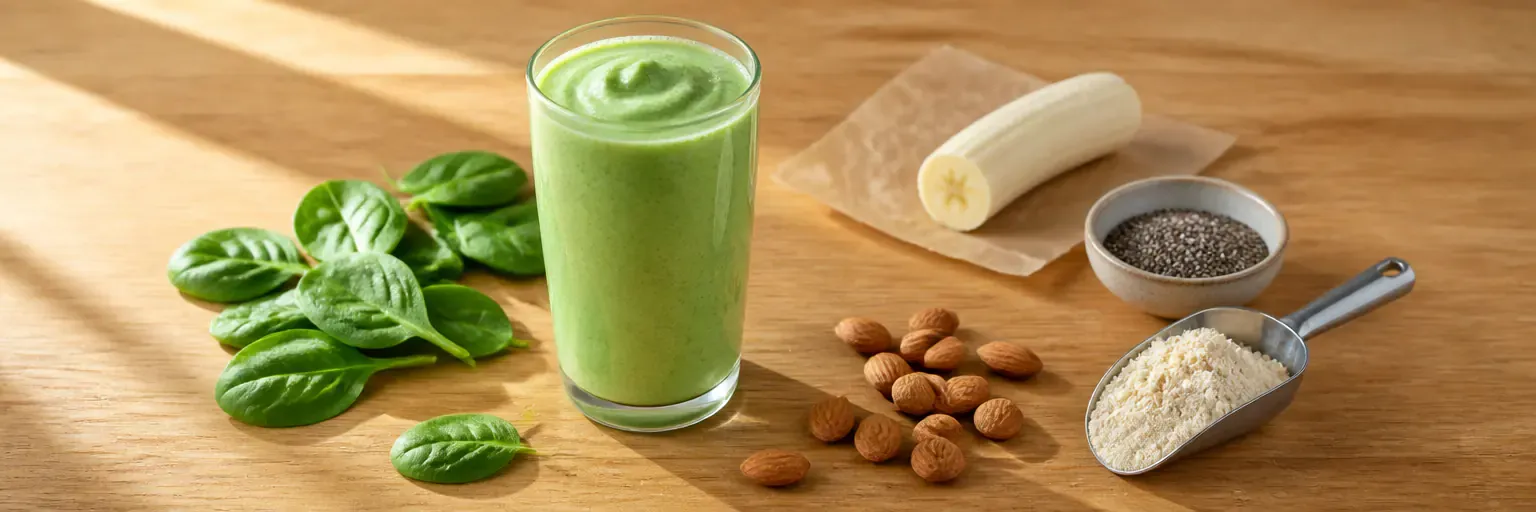
Weight-Loss Smoothies: The 4-Ingredient Formula, 8 Evidence-Based Recipes, and When Smoothies Are the Wrong Tool
Quick answer: A weight-loss smoothie is not a fruit blend — it is a 4-ingredient formula: 200 to 300 ml of liquid, 25 to 35 g of protein, 8 to 12 g of fiber, and 5 to 10 g of flavor or fat, in a 300 to 450 kcal glass. Most commercial and homemade smoothies quietly land at 500 to 800 kcal with 6 to 12 g of protein — dessert profile, not meal profile. This guide covers the formula, the 8 evidence-based recipes that fit it, a 4-week meal-swap plan, and the situations where a smoothie is the wrong tool.
Quick stats — weight-loss smoothies
- Target macros: 25–35 g protein, 8–12 g fiber, 300–450 kcal
- Base: 200–300 ml unsweetened milk, plant milk, water, coffee (not juice)
- Protein source (25 g): 1 scoop whey or plant protein, or Greek yogurt + partial scoop, or 1/2 cup blended cottage cheese + partial scoop
- Fiber source (8–12 g): 1 tbsp chia, 2 tbsp ground flax, 1 tsp psyllium, 1/2 cup oats, or 1 cup berries
- Weekly cap for meal-swap plan: 4 replaced breakfasts per week (once daily maximum)
The 4-ingredient weight-loss smoothie formula
Every weight-loss smoothie in this guide is built from four ingredient roles, in order. Miss one and the smoothie stops functioning as a meal.
Liquid (200 to 300 ml) is the base — unsweetened almond milk, 1% milk, soy milk, brewed cold coffee, or water. It is not juice. Protein (25 to 35 g) is what makes the smoothie a meal instead of a snack; below 20 g per meal the satiety effect drops off sharply (Leidy 2015). Fiber (8 to 12 g) is what closes the liquid-satiety gap and prevents the 60-minute rebound hunger that ruins most fruit smoothies. Flavor and fat (5 to 10 g) — a portion of fruit, a spice, cocoa, or a small nut-butter dose — is what makes you actually drink the thing every morning.
| Ingredient role | Portion | What it delivers | Common sources |
|---|---|---|---|
| Liquid | 200–300 ml | Volume; not calories | Unsweetened almond, soy, 1% milk, water, cold brew |
| Protein | 25–35 g | Satiety; muscle preservation on a deficit | Whey, plant protein, Greek yogurt, blended cottage cheese |
| Fiber | 8–12 g | Slow gastric emptying; blunts glucose spike | Chia, ground flax, psyllium, oats, berries |
| Flavor / fat | 5–10 g | Adherence; palatability | Fruit, cocoa, cinnamon, PB2, hemp hearts |
Everything else — greens, cocoa nibs, tart cherry juice, matcha — is optional. The four ingredient roles above are the load-bearing structure.
This guide covers DIY blender smoothies you build yourself. For the commercial pre-mixed ready-to-drink and powdered category — SlimFast, Huel, Soylent, OWYN, Premier Protein — and a per-product buy-vs-skip filter, see our weight-loss shakes pillar; the same protein and fiber floors apply, but the cost math and label-reading are different.
Why most “healthy” smoothies fail on a calorie deficit
The commercial smoothie category is a calorie-inflation problem. The typical 24-oz store-bought smoothie is closer to a milkshake than a breakfast, and the “healthy” branding hides the arithmetic.
| Product | Typical size | Calories | Protein | Sugar |
|---|---|---|---|---|
| Jamba Aloha Pineapple (24 oz) | 24 oz | ~450 kcal | 4 g | ~90 g |
| Smoothie King Angel Food Slim (32 oz) | 32 oz | ~440 kcal | 12 g | ~72 g |
| Naked Green Machine (15.2 oz bottle) | 15 oz | ~270 kcal | 4 g | ~53 g |
| Typical açaí bowl | 16 oz + granola | ~600–800 kcal | 8–14 g | ~70–100 g |
| Typical “detox” smoothie (kale, apple, ginger, lemon, honey) | 20 oz | ~400 kcal | 3 g | ~65 g |
| Typical homemade fruit-and-juice smoothie | 24 oz | ~550 kcal | 6 g | ~95 g |
Two failure modes drive that pattern. First, the fruit-juice base: a 12-oz cup of orange or pineapple juice adds 150 to 180 kcal of essentially sugar-water before anything else goes in. Second, the 500-to-800 kcal breakfast smoothie trap: at 24 to 32 oz the total volume is 2 to 3 servings, and the calorie ceiling for a single breakfast on most weight-loss targets is 300 to 450 kcal. The commercial products above are not “bad food” — they are simply not what a person in a calorie deficit should be replacing breakfast with. See sugar and weight loss for the broader picture of how added sugar quietly displaces the daily calorie budget, and artificial sweeteners and weight loss if you are considering a stevia- or monk-fruit-sweetened protein powder instead of a fruit-heavy base.
Protein-first: how much protein per smoothie
The single most important number is protein per glass, and the anchor is 25 to 35 g.
Leidy 2015 (American Journal of Clinical Nutrition) is the definitive per-meal protein review. Distributed protein intake at roughly 25 to 40 g per meal produces the largest gains in satiety, blunts subsequent-meal food intake, and preserves lean mass on a calorie deficit better than the alternative of stacking most protein into a single evening meal. Longland 2016 (American Journal of Clinical Nutrition) confirmed the lean-mass anchor: at 2.4 g/kg/day distributed across four meals, adults in an aggressive calorie deficit combined with resistance training gained 1.2 kg of lean mass and lost 4.8 kg of fat over four weeks — the higher-protein arm outperformed the lower-protein arm on every body-composition endpoint.
Practically, the fastest way to hit 25 to 35 g in a smoothie is to stack two protein sources rather than lean on one.
| Protein source | Portion | Protein | Approx cost per 25 g protein (2026 US retail) |
|---|---|---|---|
| Whey isolate | 1 scoop (30 g powder) | 24–25 g | $0.60–$1.10 |
| Soy protein isolate | 1 scoop (30 g powder) | 22–25 g | $0.55–$0.90 |
| Pea + hemp blend | 1 scoop (32 g powder) | 21–24 g | $0.80–$1.30 |
| Greek yogurt (nonfat, plain) | 1 cup | 18–22 g | $0.90–$1.40 |
| Cottage cheese (low-fat, blended) | 1/2 cup | 12–14 g | $0.70–$1.10 |
Whey is the highest-leucine, highest-DIAAS-score option; soy is the strongest plant option; pea plus hemp is the best-tolerated blend for readers avoiding both whey and soy. For a deeper breakdown of daily targets and food-first strategy, see protein intake for weight loss and high-protein breakfast ideas.
Fiber-first: how much fiber per smoothie
The second key number is 8 to 12 g of fiber per glass. This is what closes the liquid-satiety gap — the same hydration-and-fullness problem the pre-meal water protocol addresses at other meals — and prevents the fast-drop hunger that ruins most fruit smoothies.
Slavin 2013 (Nutrients) is the anchor dietary-fiber review — soluble fibers like chia, psyllium, and oat beta-glucan slow gastric emptying, blunt post-meal glucose and insulin spikes, and lower subjective hunger in the two- to four-hour window after a meal. The FDA daily reference intake is 25 g/day for a 2,000 kcal diet, which most US adults chronically miss; a fiber-forward smoothie can deliver a third of that in a single glass.
| Fiber source | Portion | Fiber |
|---|---|---|
| Chia seeds | 1 tbsp (12 g) | 4.1 g |
| Ground flax | 2 tbsp (14 g) | 3.8 g |
| Psyllium husk | 1 tsp (5 g) | 4.0 g |
| Rolled oats (dry) | 1/2 cup (40 g) | 4.0 g |
| Mixed berries | 1 cup (150 g) | 6–8 g |
Stacking two fiber sources — for example, 1 tbsp chia (4 g) plus 1 cup mixed berries (7 g) — clears 10 g without noticeably changing the calorie count. Deep dive: fiber for weight loss.
8 evidence-based weight-loss smoothie recipes
All recipes are calibrated to the 300 to 450 kcal / 25 to 35 g protein / 8 to 12 g fiber band. Grams are given for portion accuracy; blend in the order listed (liquid first, powders last) to avoid clumping.
(a) Classic Greek yogurt berry — 340 kcal, 35 g protein
- 200 ml unsweetened almond milk
- 1 cup (200 g) nonfat plain Greek yogurt
- 1/2 scoop (15 g) vanilla whey isolate
- 1 cup (150 g) frozen mixed berries
- 1 tbsp (12 g) chia seeds
Macros: 35 g protein, 28 g carb, 6 g fat, 10 g fiber. Best for: classic all-round breakfast; the strongest satiety-per-calorie of the eight.
(b) Green pineapple spinach — 320 kcal, 27 g protein
- 250 ml water
- 1 scoop (30 g) vanilla whey isolate
- 2 cups (60 g) fresh baby spinach
- 3/4 cup (120 g) frozen pineapple chunks
- 1/2 in fresh ginger
- 1 tbsp (12 g) chia seeds
Macros: 27 g protein, 34 g carb, 5 g fat, 9 g fiber. Best for: morning digestion; the ginger softens the greens flavor for smoothie beginners.
(c) High-protein chocolate PB — 380 kcal, 31 g protein
- 300 ml unsweetened oat milk
- 1 scoop (30 g) chocolate whey isolate
- 1 tbsp (7 g) unsweetened cocoa
- 2 tbsp (12 g) PB2 powdered peanut butter
- 1/2 medium (60 g) frozen banana
- 1 tbsp (12 g) chia seeds
Macros: 31 g protein, 36 g carb, 8 g fat, 9 g fiber. Best for: chocolate cravings; the PB2 delivers peanut-butter flavor at a fraction of the calorie cost of regular PB.
(d) Vegan tropical — 360 kcal, 28 g protein
- 250 ml unsweetened coconut water
- 1 scoop (32 g) pea + hemp protein blend
- 3/4 cup (120 g) frozen mango
- 2 tbsp (16 g) hemp hearts
- 1 tbsp (12 g) chia seeds
- 1 tsp lime juice
Macros: 28 g protein, 34 g carb, 10 g fat, 10 g fiber. Best for: dairy-free and whey-free; hemp hearts add creaminess without a nut allergen.
(e) Coffee-oat breakfast — 350 kcal, 30 g protein
- 250 ml cold brew coffee
- 100 ml unsweetened almond milk
- 1 scoop (30 g) vanilla whey isolate
- 1/3 cup (27 g) rolled oats
- 1/2 medium (60 g) frozen banana
- 1/2 tsp cinnamon
Macros: 30 g protein, 38 g carb, 4 g fat, 6 g fiber (add 1 tbsp chia to clear 10 g). Best for: replacing coffee-and-pastry mornings; the cold brew doubles the smoothie as your caffeine delivery.
(f) Cottage cheese vanilla-berry — 330 kcal, 40 g protein
- 200 ml unsweetened almond milk
- 3/4 cup (170 g) low-fat cottage cheese
- 1/2 scoop (15 g) vanilla whey isolate
- 1 cup (150 g) frozen mixed berries
- 1 tbsp (12 g) chia seeds
- 1/4 tsp vanilla extract
Macros: 40 g protein, 24 g carb, 6 g fat, 9 g fiber. Best for: highest-protein option in the guide; blended cottage cheese is nearly indistinguishable from Greek yogurt in texture and delivers more casein per calorie.
(g) Fiber-focused (raspberry-flax) — 340 kcal, 28 g protein
- 250 ml plain low-fat kefir
- 1 scoop (30 g) soy protein isolate
- 2 tbsp (14 g) ground flax
- 1 tsp (5 g) psyllium husk
- 1 cup (125 g) frozen raspberries
Macros: 28 g protein, 32 g carb, 8 g fat, 15 g fiber. Best for: the fiber-focused option; kefir adds probiotics and the psyllium delivers a full daily fiber jump in a single glass. Introduce gradually if you are not currently a high-fiber eater.
(h) Post-workout recovery — 430 kcal, 32 g protein
- 250 ml whole milk
- 1 scoop (30 g) vanilla whey isolate
- 1 medium (120 g) banana
- 1/4 cup (60 ml) tart cherry juice
- 5 g creatine monohydrate
Macros: 32 g protein, 48 g carb, 10 g fat, 4 g fiber. Best for: immediate post-training window; the higher carb load restocks muscle glycogen, and the creatine dose sits at the standard 5 g/day maintenance.
The 4-week smoothie meal-swap plan
Do not swap every breakfast on day one. Ramp so your gut and your morning routine both adapt.
| Week | Smoothie breakfasts per week | Total breakfasts | Notes |
|---|---|---|---|
| 1 | 1 | 7 | Pick the Classic Greek yogurt berry to establish the baseline |
| 2 | 2 | 7 | Add a second recipe from (b) to (f); avoid the fiber-focused version until week 3 |
| 3 | 3 | 7 | Introduce the raspberry-flax (g) once; monitor tolerance |
| 4 | 4 | 7 | The cap — do not exceed four replaced breakfasts per week |
Four replaced breakfasts per week is the working ceiling for long-term use. Beyond that, protein diversity drops, chewing time drops (which further widens the liquid-satiety gap), and the smoothie starts to displace whole-food breakfasts that carry independent nutrition value. Anchor the smoothie plan inside a broader calorie-band structure — see weight-loss meal plan and pick your calorie target from the 1200-calorie meal plan, 1500-calorie meal plan, or 1800-calorie meal plan. Save a working shopping list from weight-loss grocery list so the ingredients are already in the house when Monday morning arrives.
Smoothies vs whole-food breakfasts
Smoothies are not universally better than a well-built solid breakfast. The honest comparison is a trade-off table.
| Dimension | Smoothie | Whole-food breakfast (eggs, oats, Greek yogurt bowl) |
|---|---|---|
| Satiety per calorie | Lower — liquid calories are less satiating per kcal than solid food (Almiron-Roig 2013; Mattes 2005) | Higher |
| Preparation time | ~3 minutes with prepped bags; 5 minutes from scratch | 8–15 minutes |
| Cost per serving | ~$2.50–$4.00 with protein powder + berries | ~$1.50–$3.50 |
| Portion-control accuracy | High — the glass is the portion | Moderate — plated eating drifts |
The trade-off is real: whole food wins on satiety per calorie; the smoothie wins on speed and consistent protein delivery. If your biggest weight-loss problem is skipping breakfast or under-fueling protein at breakfast, the smoothie is often the higher-leverage fix. If your biggest problem is mid-morning hunger, a solid breakfast is likely the better default. Most people who succeed long-term rotate both, using the smoothie for the busy 3 to 4 mornings per week and cooking on weekends. For the mid-morning gap, layer in smart snacking strategies rather than adding a second smoothie.
Special-situation sub-bullets
- Post-bariatric. High-sugar smoothies (fruit juice base, honey, dates, granola toppings) can trigger dumping syndrome — nausea, cramping, flushing, and reactive hypoglycemia — in the first year post-surgery. Stick to protein-first, low-sugar formulations, sip over 20 to 30 minutes, and separate the smoothie from a beverage.
- GLP-1 users. The single most important smoothie change on semaglutide or tirzepatide is a protein-first framing. Appetite suppression from a GLP-1 makes it easy to under-eat protein, which accelerates lean-mass loss and worsens the weight rebound after stopping. See rebound weight gain after stopping GLP-1 for the full protein and resistance-training anchor.
- Type 2 diabetics. Blend timing matters — drink the smoothie in one 15- to 20-minute window rather than sipping over two hours, and pair with a short walk to blunt the glucose curve. Prefer berries (low glycemic load) over tropical fruit as the flavor base, and add 1 tbsp of chia or 1 tsp psyllium to slow gastric emptying. The resistant-starch trick — a tablespoon of cooked-and-cooled oats — softens the post-smoothie glucose spike further.
- IBS. Fructans and lactose are the two biggest FODMAP triggers in smoothies. Use lactose-free milk or unsweetened almond milk, prefer strawberries and blueberries over apple and mango, skip inulin-based protein powders, and start psyllium at half doses.
- Lactose-intolerant. Soy protein isolate or a pea-plus-hemp blend with unsweetened almond, oat, or lactose-free milk covers essentially all recipe families in this guide. The vegan tropical (d) and fiber-focused (g) recipes are already whey-free.
The 5 most common smoothie mistakes
- (a) Juice-base calorie bloat. A 12-oz cup of orange juice adds ~170 kcal of sugar-water. Swap for unsweetened almond milk (~30 kcal) or water and use whole fruit for flavor.
- (b) Fruit-only smoothies with no protein. A blueberry-banana-almond-milk smoothie without a protein source is ~280 kcal of carbs and fat with 4 g of protein — the profile of a small dessert, not a meal. Every weight-loss smoothie in this guide has a dedicated protein source.
- (c) 800-kcal bowls masquerading as smoothies. Once granola, coconut flakes, chocolate chips, and nut butters land on top of a smoothie bowl, the total commonly clears 700 to 900 kcal. If you love the format, halve the smoothie base and cap toppings at 15 g of granola plus 10 g of nut butter.
- (d) Drinking too fast. Liquid calories are meaningfully less satiating per kcal than solid food (Almiron-Roig 2013), and slamming a smoothie in 90 seconds amplifies that gap. Slow to 10 to 15 minutes and the smoothie behaves closer to a solid-food breakfast.
- (e) No fiber → rebound hunger within an hour. A smoothie without a dedicated fiber source (chia, flax, psyllium, oats, or a full cup of berries) tends to leave you hungry again inside 60 to 90 minutes. Every recipe in this guide includes at least one dedicated fiber source.
When smoothies are the wrong tool
A smoothie is not the right tool for every eater. Skip or defer smoothies if any of the following applies:
- Restrictive-eating history or active eating disorder (anorexia, bulimia, binge-eating disorder, ARFID). Liquid meals can reinforce restriction patterns and disconnect eating from hunger and fullness cues.
- Post-bariatric dumping-syndrome history at any sugar exposure.
- Severe gastroesophageal reflux disease (GERD). The rapid ingestion and high volume of a 300 to 450 ml drink can worsen reflux symptoms.
- Any diagnosed eating-disorder pattern under active clinical management.
In any of these situations, work with a registered dietitian or your clinician before adding smoothie meal-swaps to your weekly rotation. For readers considering broader clinical liquid-nutrition protocols, meal-replacement programs covers the medically-supervised category (Optifast, Cambridge Weight Plan, Herbalife) and where it fits.
Sources at a glance
Sources
- Leidy HJ, Clifton PM, Astrup A, et al. The role of protein in weight loss and maintenance. American Journal of Clinical Nutrition (2015).
- Longland TM, Oikawa SY, Mitchell CJ, et al. Higher compared with lower dietary protein during an energy deficit combined with intense exercise promotes greater lean mass gain and fat mass loss. American Journal of Clinical Nutrition (2016).
- Slavin JL. Fiber and prebiotics: mechanisms and health benefits. Nutrients (2013).
- Almiron-Roig E, Palla L, Guest K, et al. Liquid calories and the failure of satiety: how good is the evidence? Obesity Reviews (2013).
- Mattes RD. Soup and satiety. Physiology & Behavior (2005).
- Aloia JF, Dhaliwal R, Mikhail M, et al. Protein intake and satiety. American Journal of Clinical Nutrition (2016).